Tailored support at every stage.
Equality and Organizational ChangeAn organizational diagnosis is a strategic decision.
Participatory Gender AuditOur 5-stage process
The aim is to develop equality measures based on structured change management. An organizational change succeeds when it has the buy-in of all parties.
Leading a change process on equality with an intersectional perspective requires not only mastering change management and leadership tools, but also considering possible resistance rooted beyond the professional sphere.
Our support ensures a process adapted to the size and needs of each organization.
Hover over each stage of the wheel to see its content.
The deliverables of organizational change support for equality depend on the objectives and scope of the change sought. They are planned and adapted to each context at the start of the process.
The complete cycle, which has 5 stages, typically includes:
To support our clients and partners in the change towards equality, we work with the A.D.K.A.R. method (Awareness, Desire, Knowledge, Ability and Reinforcement), adapted by the ILO International Training Centre (ITC-ILO) for equality. This process comprises five key stages:
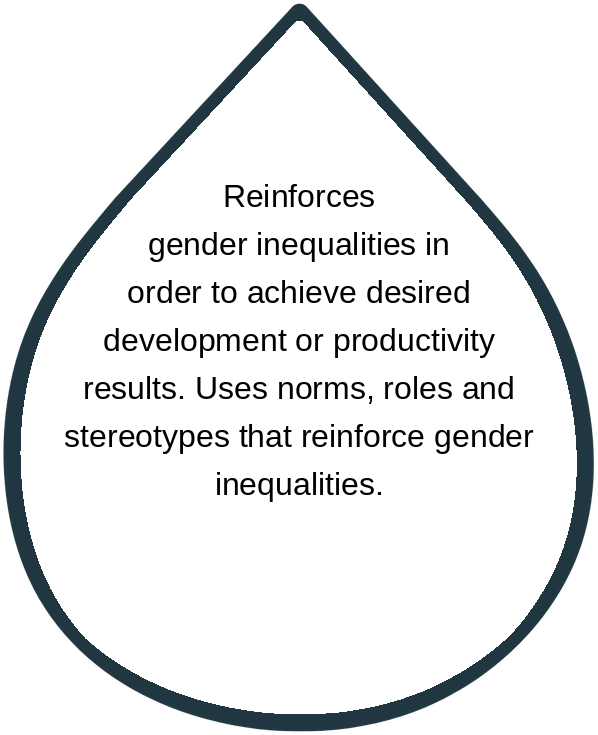
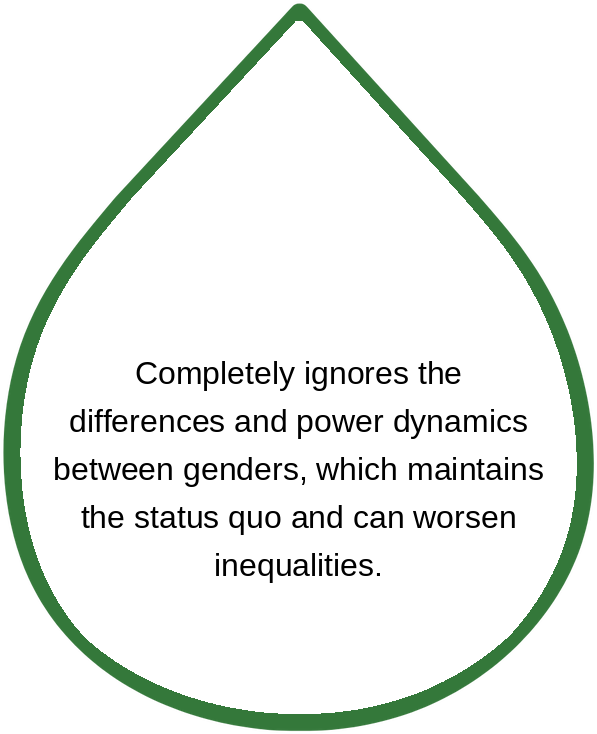
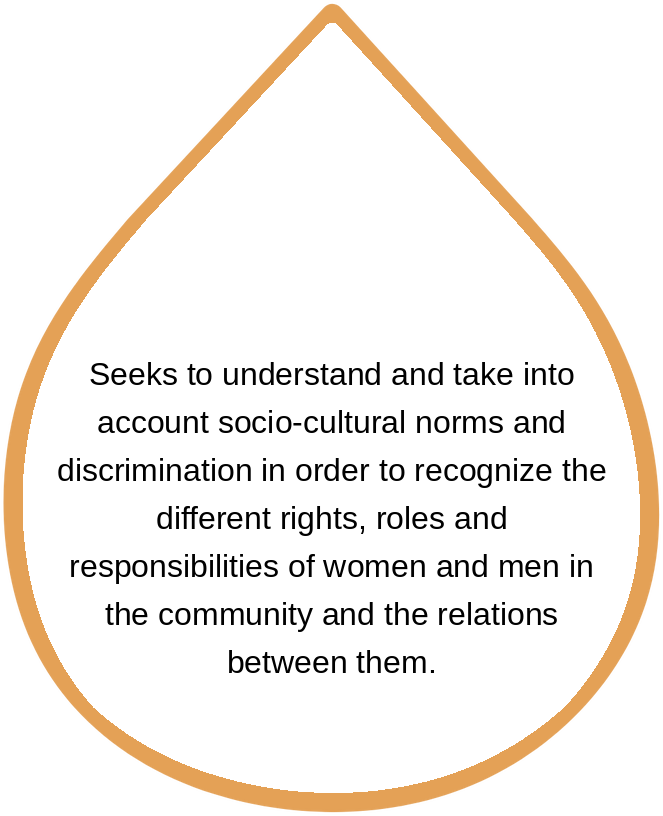
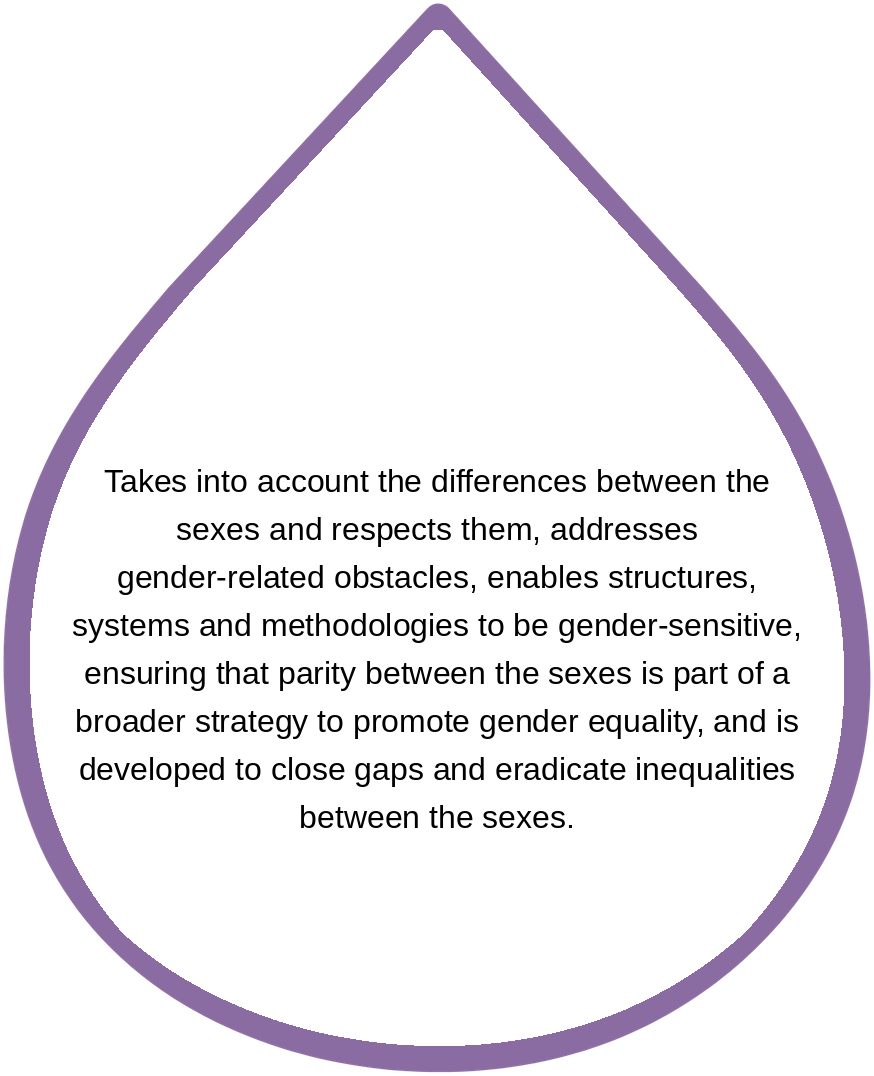
We use the gender scale as an indicator of the PGA result.

Reinforces gender inequalities in order to achieve desired development or productivity results. Uses norms, roles and stereotypes that reinforce gender inequalities.
Completely ignores the differences and power dynamics between genders, which maintains the status quo and can worsen inequalities.
Seeks to understand and take into account socio-cultural norms and discrimination in order to recognize the different rights, roles and responsibilities of women and men in the community and the relations between them.
Takes into account the differences between the sexes and respects them, addresses gender-related obstacles, enables structures, systems and methodologies to be gender-sensitive, ensuring that parity between the sexes is part of a broader strategy to promote gender equality, and is developed to close gaps and eradicate inequalities between the sexes.
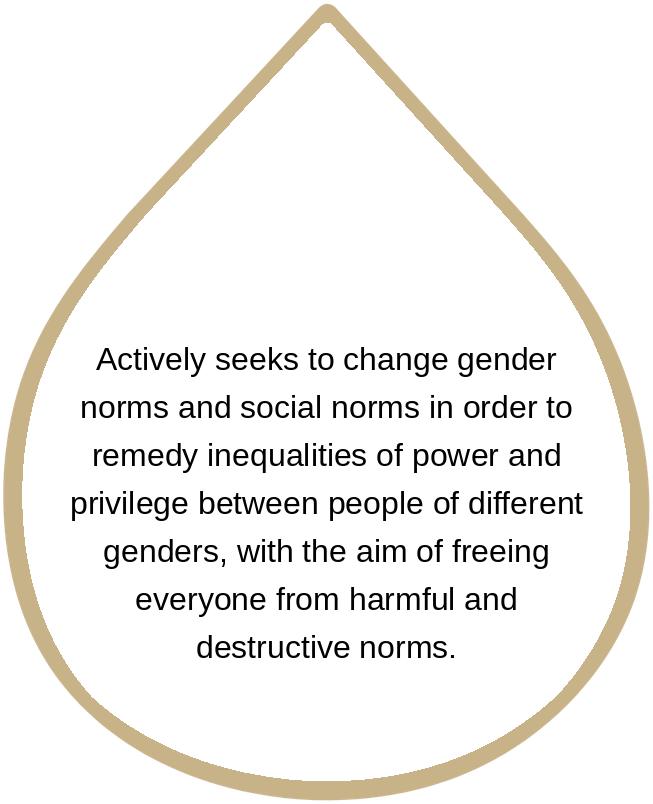
Actively seeks to change gender norms and social norms in order to remedy inequalities of power and privilege between people of different genders, with the aim of freeing everyone from harmful and destructive norms.
Hover over — or tap — each stage to see its description.
Our certified tool
A workplace audit is an effective way to address chronic conflicts, as it goes beyond the surface. It identifies the power dynamics and norms behind these patterns, in order to obtain a clear diagnosis and a truly actionable action plan.
Participatory gender audits (PGAs) are a type of social audit focused on gender equality. Our PGAs use the methodology developed by the International Labour Organization (ILO).
In addition, PGAs identify and celebrate existing good practices on equal rights and opportunities.
We are certified by the International Training Centre of the International Labour Organization (ILO) as Participatory Gender Audit (PGA) Facilitators, which guarantees a methodology aligned with international standards and based on human rights.
Illustration source: ITCILO
The final deliverable of the PGA is the PGA report. It serves as a benchmark to measure future progress and contains operational recommendations based on S.M.A.R.T. objectives, to improve equality in organizations and strengthen their social responsibility. It also serves as a baseline for organizations beginning their path towards equality. We use the gender scale as an indicator of the PGA result.
Our à la carte PGAs allow organizations to choose from packages adapted to their needs, complementing the PGA with support in implementing the recommendations. Each PGA is unique, but the goal is the same: to obtain a comprehensive diagnosis and a realistic action plan.
PGA report with SMART recommendations and good practices.
PGA with support for implementing the recommendations and indicators (KPIs).
PGA+ with a training cycle or a collective intelligence workshop with senior managers.
The PGA rests on four pillars that represent its methodological foundations:
The key stages of the PGA are:
The PGA can be carried out in person, virtually or in a hybrid format. Depending on the context, it can be conducted in a single department or unit of an organization.
What is the difference between a PGA and a gender diagnosis, evaluation or analysis?
Our PGA is based on a methodology developed by the ILO and cuts across the whole organization: activity is analysed at both the organizational and programme levels, and all methodological stages are required for it to count as a PGA.
Equality diagnoses, analyses or evaluations, by contrast, may focus on a particular aspect — a service, a product, a project or a programme. In addition, the PGA is participatory by nature: it involves the active participation of staff, with all hierarchical levels represented, whereas diagnoses, analyses and evaluations can be participatory without it being an essential requirement.
Choosing the right service depends on the needs and objectives of each organization:
Not sure which product you need? Contact us — we would be happy to talk and clarify your needs and objectives.
| Service | Participatory Gender Audit (PGA) | Equality diagnosis | Equality analysis | Equality evaluation |
|---|---|---|---|---|
| Main objective | Examine institutional policies, programmes and processes, including organizational culture, to identify obstacles to equality and propose corrective actions | Establish a quantitative and qualitative diagnosis of gender inequalities in a given context | Understand the relationships, roles and power dynamics between genders in a specific context | Measure the impact and results of an intervention on equality |
| Timing of intervention | At any time, cyclically | Design or initial diagnosis phase | Planning or design phase | During or after implementation |
| Methodological approach | Participatory, with strong involvement of stakeholders | Mixed: quantitative and qualitative data, less participatory | Qualitative and contextual, focused on understanding dynamics | Evaluative, with indicators and performance criteria |
| Reach | The whole organization (policies, culture, programmes, leadership) | Specific sector, organization or project | Specific context, project or policy | Specific programme, project or policy |
| Expected result | PGA report with SMART executive recommendations | Precise knowledge of the initial situation | In-depth understanding to better design interventions | Monitoring, learning, accountability |
| Ideal use | Establish a baseline to launch an organizational transformation for equality | Launching an equality strategy or setting non-cross-cutting objectives | Design of equality projects and policies | Measuring progress and adjusting strategies and objectives |
Organizational impact